
Gibus
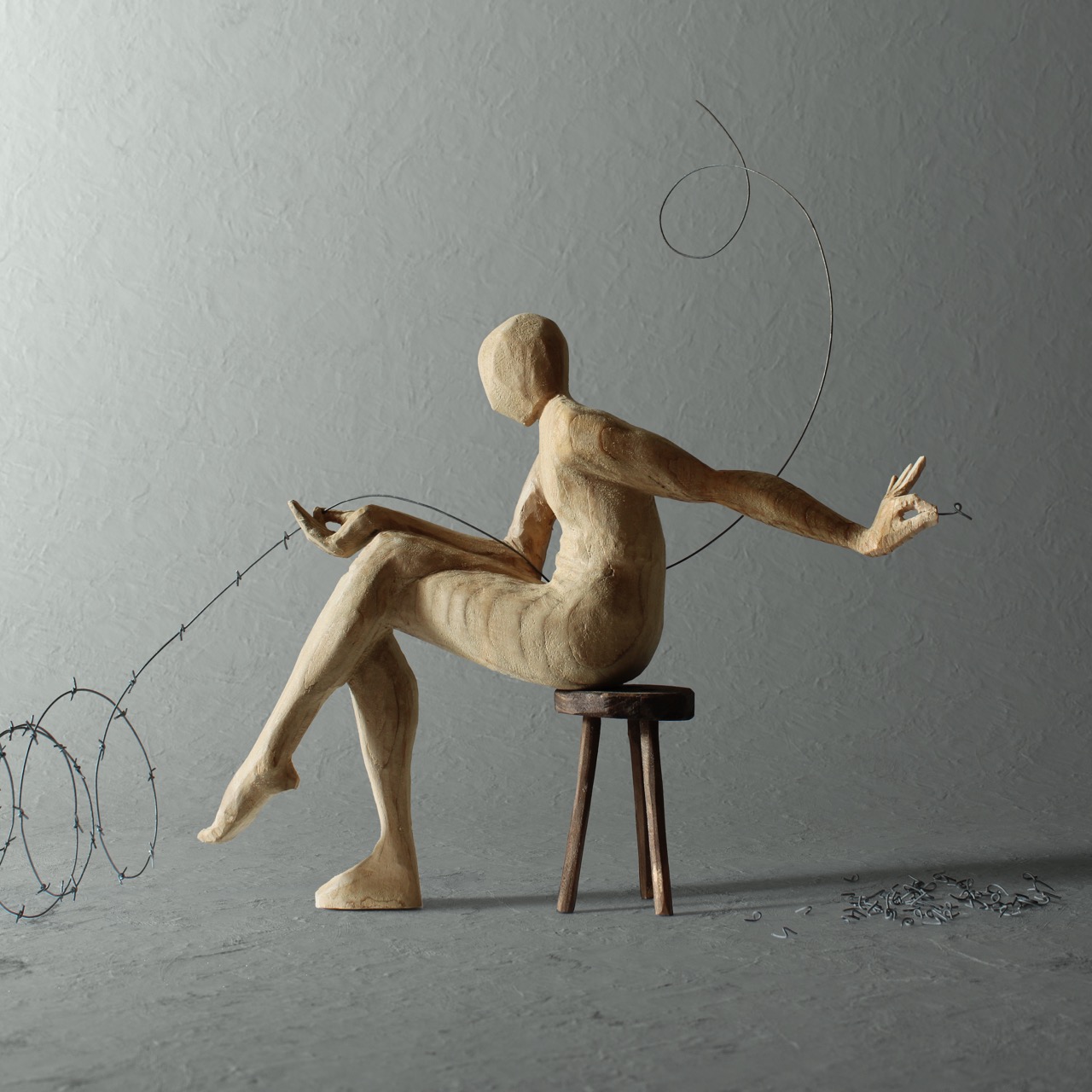
The piece is not about softening suffering, but about the radical transformation of what inflicts it. By removing the barbs one by one from the barbed wire, the man does not try to endure violence, he disarms it. He does not break the material; he neutralizes its oppressive function. The wire remains, but it no longer confines, no longer cuts, no longer acts as a weapon, becoming once again a simple line of metal. Si Vis Pacem, Para Pacem (If you Want Peace, Prepare Peace) takes on a blunt meaning here: peace is not born from fear or destruction, but from the patient dismantling of the mechanisms of domination. The sculpture asserts that true revolution is not spectacular, it consists in removing what hurts until violence itself loses its purpose.
Gibus is a french artist based near Bordeaux. In his work, Gibus does not aim to illustrate ideas but to challenge fundamental human behaviors: the habit of enduring, of accommodating constraint, or, conversely, of disarming it. Each sculpture functions as a frozen moral situation in which the viewer recognizes themselves in an absurd, futile, or lucid gesture. He is less interested in symbols than in the invisible mechanisms of domination, resignation, and self-deception that structure our daily lives. For him, material becomes a tool of thought: it makes visible our compromises with oppression, our fear of breaking free, and our, sometimes, capacity to transform what confines us. His approach is deliberately direct, almost brutal, because philosophy only has power when it disturbs rather than reassures.
"Si Vis Pacem, Para Pacem" (If you Want Peace, Prepare Peace), Gibus number 137 (60x45x25cm)