Valerie Mortier
“How can we speak about peace today? To speak about peace is not as straightforward as it may seem. The moment peace is named, its opposite inevitably enters the conversation. As with the question ‘Am I happy?’, the very act of asking also evokes the possibility of unhappiness. Peace, too, seems difficult to consider without the presence of war, violence, or loss.
This raises a more fundamental question: can peace be understood on its own terms, or does it derive its meaning only through what it is not? History and contemporary experience continually confront us with conflict. Images of violence shape our understanding of the world, while peace often remains unnoticed precisely because it appears ordinary. It resides in the possibility of feeling safe, of belonging, of trusting others, or of imagining a future. Perhaps peace is not an ideal state beyond vulnerability, but a fragile condition that requires constant attention. Its value may lie not in its permanence, but in the awareness that it can never be taken for granted.
If a miracle were to happen tonight and I woke up tomorrow in a world at peace, how would I relate this idea to my art? Peace would not erase history; it would transform our relationship to it. It would allow us to be at peace with the past, to find calm in the present, and to imagine the future without the constant anticipation of conflict.”
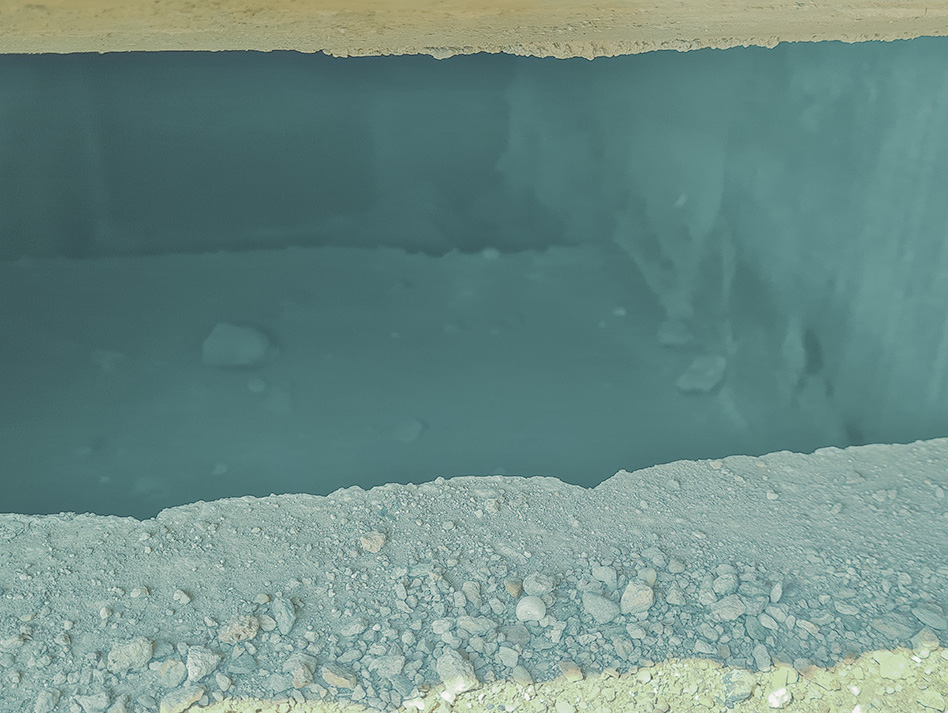
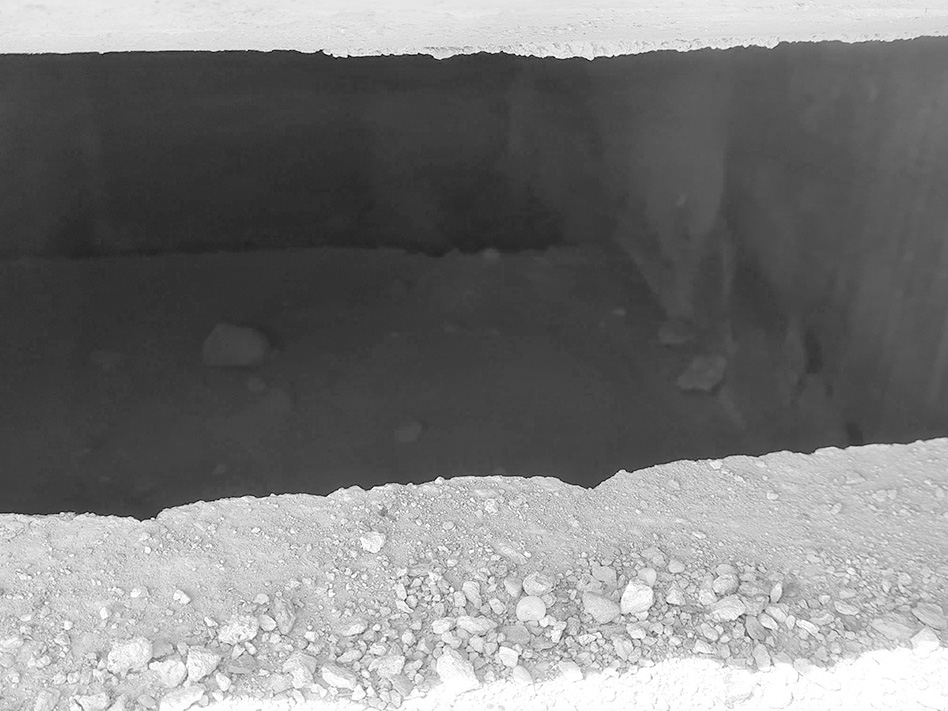
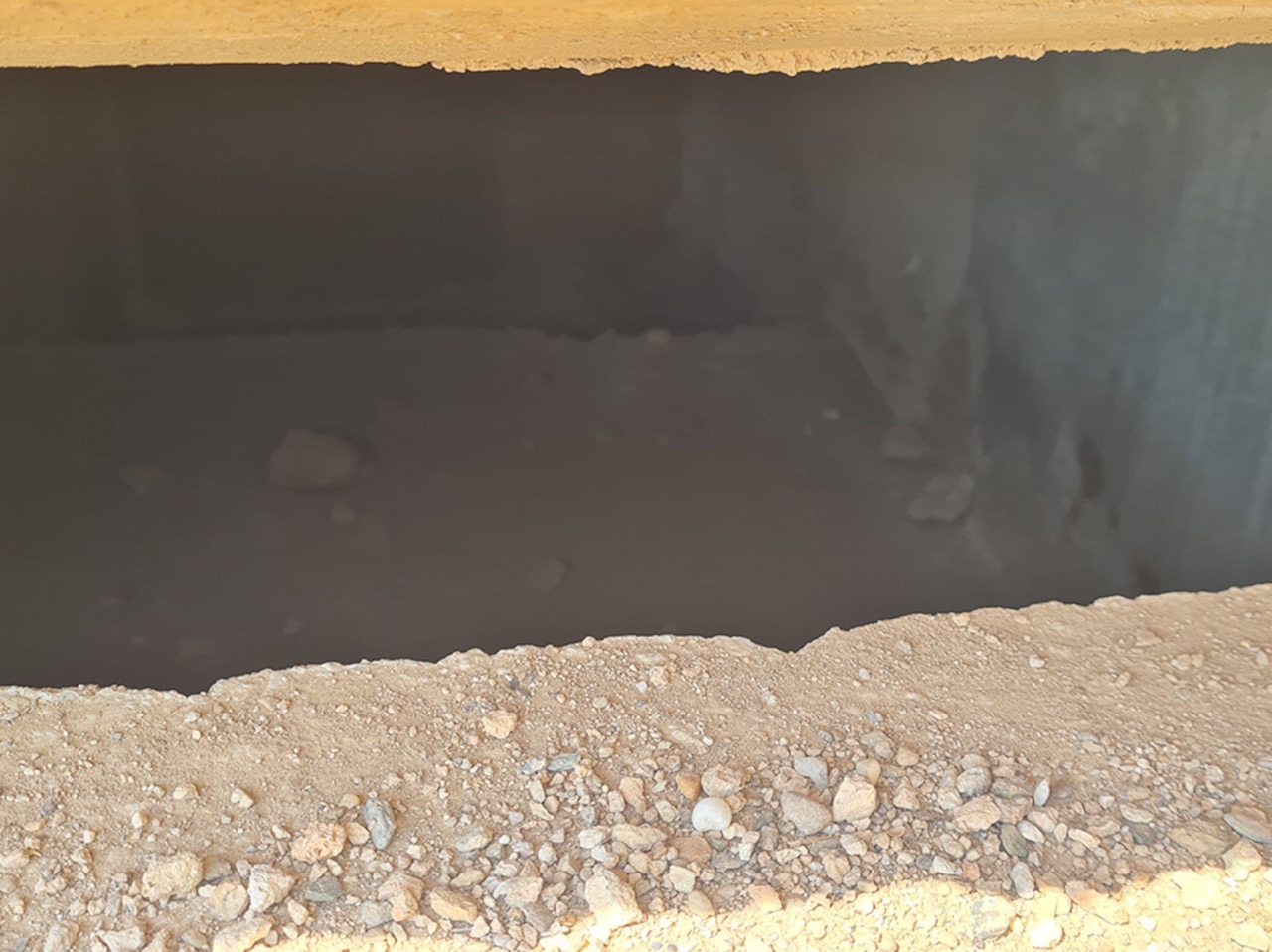
The three photographs depict fragments of old wartime bunkers along the Spanish coast. Their entrances appear only partially within the frame and are almost dissolved by the intense sunlight through overexposure. As a result, the images lose their documentary quality and begin to resemble test prints or the first frames of an analogue film roll, where the image is still incomplete and traces of imperfections remain visible.
Across the series, variations of the same photographic source—through color, black-and-white, and reworked exposures—intensify processes of overexposure and fragmentation, gradually eroding the image’s documentary status and shifting it toward a space where memory, landscape, and history become unstable and partially obscured.
This visual ambiguity reflects the position of the bunker itself within the landscape. Once constructed as a form of protection against an external threat, it now remains as a silent witness to a conflict that has largely disappeared from view. The military structure is still present, yet it is not shown directly. Instead, it appears as a fragment, a remnant suspended between memory and disappearance.
The fact that these bunkers are located along the Spanish coastline adds another layer of tension to the images. Today, this landscape is primarily associated with holidays, leisure and everyday life. Yet among the beaches, sea and sunlight, traces of another history persist. The bunkers serve as reminders that places contain multiple layers of time and that beneath a familiar and seemingly carefree landscape, a more complex past often remains embedded. Everyday life has returned, but the traces of history have not entirely vanished.
Within the context of this project, the bunkers point to a historical reality that remains present in the background. While other works revolve around notions of home, shelter and vulnerability, these images remind us that safety can never be taken for granted. The overexposure seems less concerned with revealing information than with obscuring it, allowing the bunkers to emerge as quiet traces of a past that can never be fully recovered or reconstructed.
Valerie Mortier lives and works in Belgium. Her post-documentary practice brings together photography, archival material, found footage, collage and drawing. Through these media, she explores memory, archives, intergenerational history, landscape, identity, and the fragile relationship between presence and absence. The work moves between documentation and imagination, using fragmentation and visual ambiguity to evoke what cannot be fully remembered or represented.
“20240821_1608 (I), 20240821_1608 (II), 20240821_1608 (III),” photography, archival pigment print on paper (30x22,5cm each)